
Some links below are affiliate links. If you buy through one, we earn a commission at no extra cost to you. It never changes a verdict — here is how that works.
You built the gym. You’ve got the rack, the weights, the cardio machine. You show up consistently. But you’re sore all the time, your joints ache, and your performance has plateaued.
The problem isn’t your training. It’s your recovery.
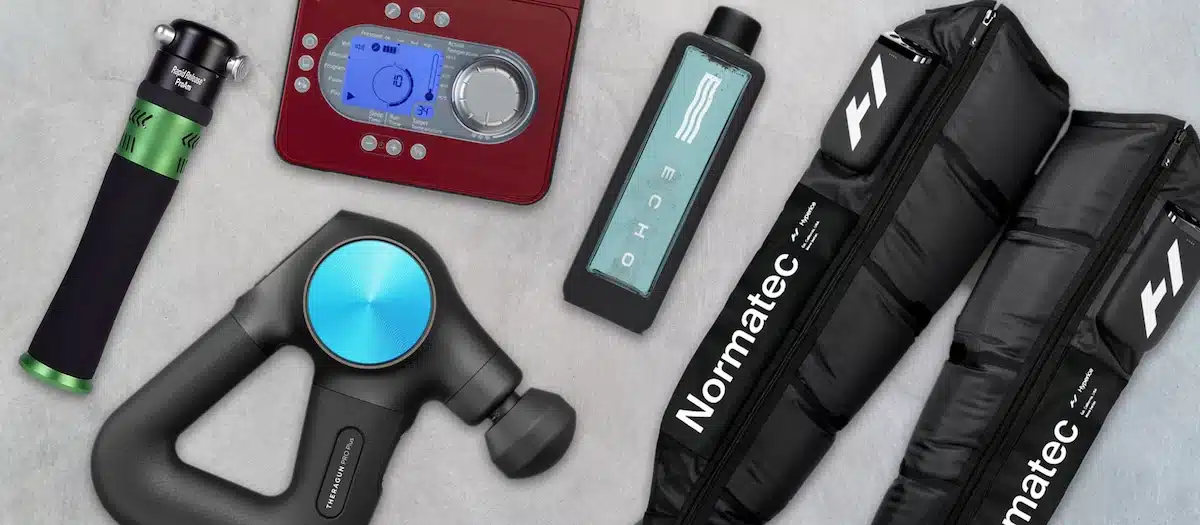
In 2026, the fitness industry is finally giving recovery the attention it deserves. What was once a luxury reserved for professional athletes — compression therapy, percussion massage, contrast therapy — is now available at consumer price points that make it practical for home gym users.
But not everything works as advertised. Here’s what’s genuinely effective, what’s overhyped, and what deserves a spot in your gym.
Percussion Massage Guns: The Foundation
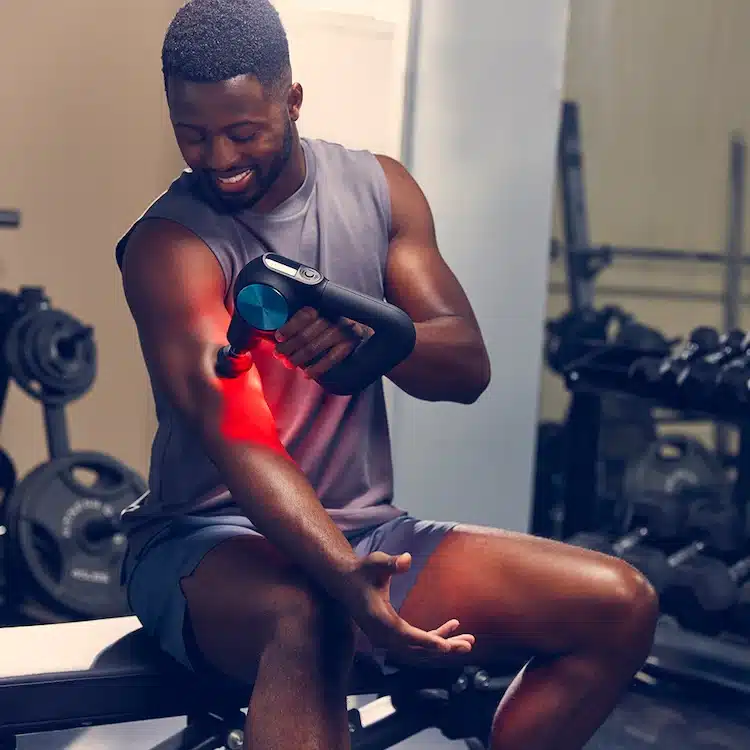
If you own one piece of recovery equipment, make it a massage gun. The category has matured to the point where even mid-range devices deliver excellent performance, and the benefits are well-documented: increased blood flow to targeted muscles, reduced perceived soreness, improved range of motion, and faster recovery between sessions.
The Theragun line remains the gold standard, but you don’t need the $400 flagship model. The Theragun Mini ($200) handles 90% of what the full-size unit does in a more portable package. Hyperice’s Hypervolt series is equally capable. And budget options in the $80-$120 range from brands like Bob and Brad or TOLOCO deliver surprisingly good results for casual users.
The key features that matter: adjustable speed settings (you want at least 3 levels), a stall force high enough to maintain pressure on large muscle groups, and battery life sufficient for a full session (15+ minutes). Attachment heads matter less than marketing suggests — a standard ball head handles most applications.
Use it for 1-2 minutes per muscle group after training. Focus on the muscles you worked that session. Don’t overdo it — more pressure and more time isn’t better.
Compression Boots: Worth It If You Train Hard
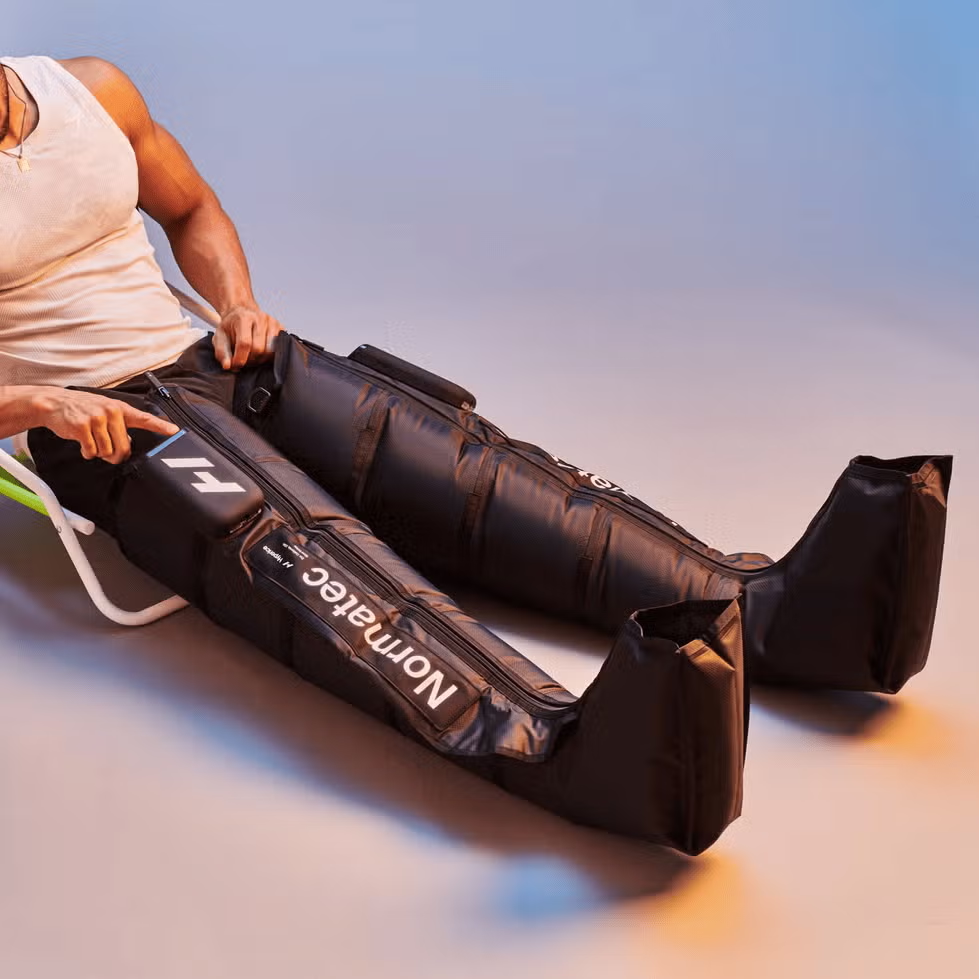
Pneumatic compression boots — the inflatable leg sleeves that sequentially squeeze from your feet to your thighs — were once $1,500+ professional tools. In 2026, quality options start around $300-$500.
The mechanism is straightforward: rhythmic compression pushes fluid out of your legs, reducing inflammation and accelerating the removal of metabolic waste products from training. Studies show improved perceived recovery and reduced muscle soreness, particularly after high-volume lower body training or endurance work.
If you train legs hard 3+ times per week, run, or do significant cardio, compression boots are a worthwhile investment. Use them for 20-30 minutes post-training while you stretch, eat, or watch something.
If you train 2-3 times per week at moderate intensity, the benefit is marginal and your money is better spent elsewhere.
Contrast Therapy: The Dark Horse
Contrast therapy — alternating between heat and cold — has strong evidence behind it for recovery. The traditional approach required a cold plunge and a hot tub, which is impractical for most home gyms.
Hyperice’s X series has changed that. The X 2 Knee and X 2 Shoulder units deliver portable contrast therapy with adjustable cold (down to 40°F), heat (up to 121°F), and compression (up to 160 mmHg). No ice, no water, no cords during use. Wrap it around the joint, select your settings, and let it work.
These are targeted tools — they work on specific joints, not full-body recovery. But if you have a knee, shoulder, or elbow that chronically bothers you after training, a dedicated contrast therapy device can make the difference between managing the issue and being limited by it.
What’s Overhyped
Infrared saunas have passionate advocates, but the evidence for recovery-specific benefits (as opposed to general wellness) is thin. A quality infrared sauna costs $2,000-$5,000 and takes significant space. If you want the relaxation benefit and have the budget, go for it. But don’t expect measurable performance improvements.
Vibration plates for recovery are mostly marketing. The vibration stimulus doesn’t provide meaningful recovery benefit beyond what standing on solid ground and doing light stretching would achieve.
The Practical Recovery Setup
Here’s what I’d buy, in priority order, if I were building a recovery corner in my home gym.
First: a massage gun ($100-$200). The highest-impact, lowest-cost recovery tool available. Use it daily.
Second: a quality foam roller ($30) and lacrosse ball ($5). Low-tech, highly effective for self-myofascial release. They never need charging and they never break.
Third: compression boots ($300-$500), but only if you train at high volume. Skip these if you’re a 3-day-per-week recreational lifter.
Fourth: a targeted contrast therapy device ($200-$300) if you have a specific joint that limits your training.
Total investment: $435-$1,035, and your recovery matches or exceeds what most commercial gyms offer. Your body will thank you, and your training will reflect it.