
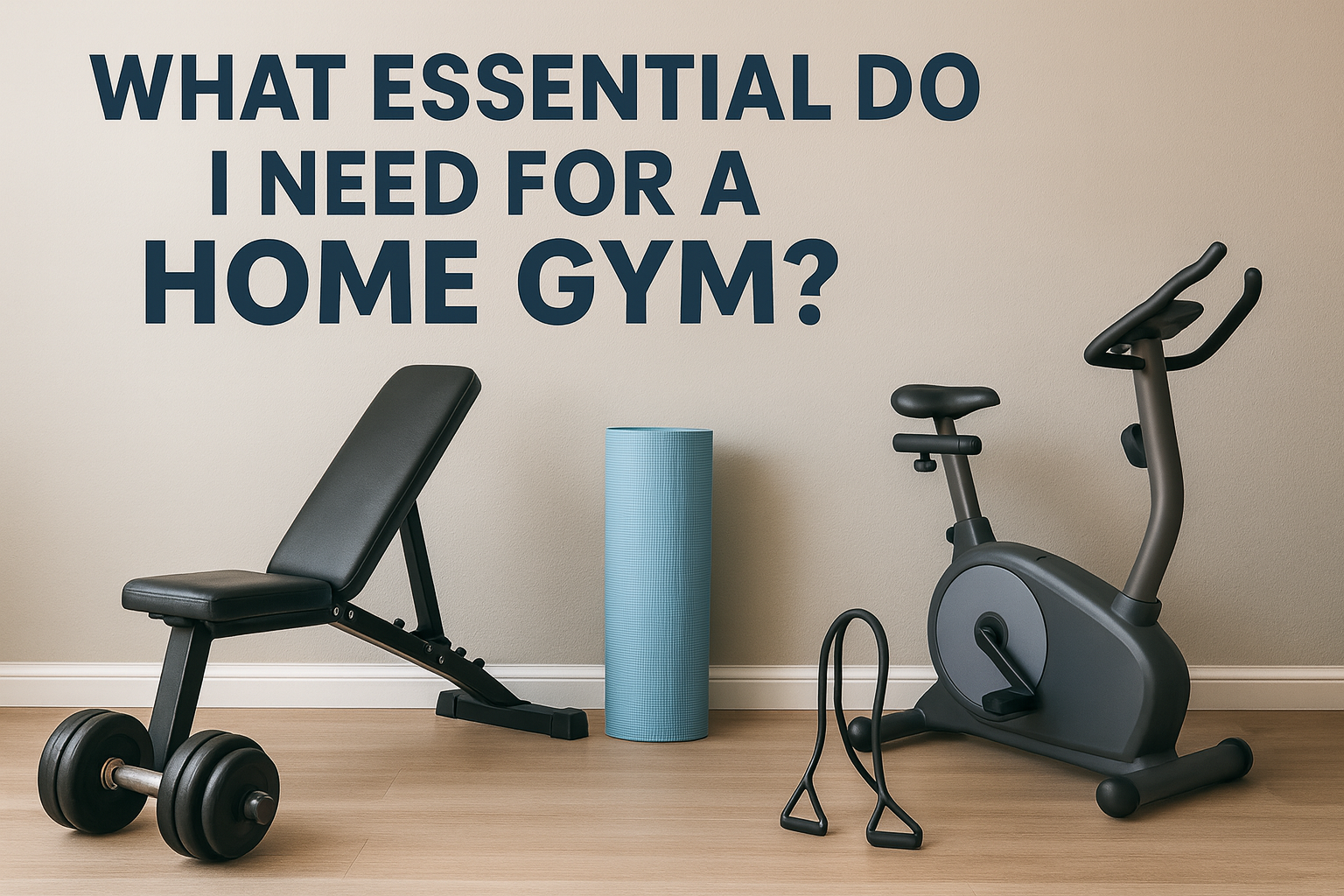
Building a home gym is one of the smartest fitness decisions you can make. It saves time, eliminates excuses, and gives you the flexibility to work out on your schedule. But when you’re starting from scratch, one question immediately comes up:
“What essential equipment do I need for a home gym?”
With endless gear options—racks, benches, dumbbells, kettlebells, rowers, bikes, mats, mirrors—it’s easy to feel overwhelmed. The reality is that most people don’t need a full commercial setup. Instead, you need a small number of must-have essentials that cover every major movement pattern and fitness goal.
In this guide, we’ll break down the core equipment you actually need, the nice-to-have upgrades, and how to build a home gym that fits your space, budget, and lifestyle.
The 5 Essential Pieces of Equipment Every Home Gym Should Have
To build an effective home gym that supports strength training, fat loss, mobility, and long-term progress, you only need five essentials:
- Adjustable Dumbbells
- A Bench or Adjustable Bench
- Resistance Bands (Light–Heavy)
- A Quality Exercise Mat or Flooring
- Cardio Equipment (Your Best Fit)
Let’s break these down one by one—including what to look for, why they matter, and the best options for different budgets.
1. Adjustable Dumbbells (The Most Essential Home Gym Tool)
If you’re only going to buy one piece of home gym equipment, make it adjustable dumbbells.
✔ Why They’re Essential
Dumbbells allow you to train every muscle group with hundreds of exercises:
- Chest presses
- Rows
- Squats
- Lunges
- Shoulder work
- Arm isolation
- Core work
- Power movements
Unlike bulky racks of fixed dumbbells, adjustable sets give you a full weight range in a compact footprint.
✔ What to Look For
- Fast weight-changing mechanism
- Wide weight range (ideally 5–50 lbs)
- Sturdy construction
- Comfortable handles
- Secure locking system
✔ Best Types
- Dial-style adjustable dumbbells — quick change, great for circuits
- Selector pin models — rugged and reliable
- Plate-loaded handles — budget-friendly, more compact
Bottom line: Adjustable dumbbells deliver maximum versatility in the smallest amount of space. They are absolutely essential for any home gym.
2. A Flat or Adjustable Bench
A bench instantly increases the number of exercises you can perform safely and effectively. It also improves form by giving you support and stability.
✔ Why a Bench Matters
With a bench you can perform:
- Dumbbell bench press
- Incline chest work
- Shoulder press
- Seal rows
- Step-ups
- Bulgarian split squats
- Hip thrusts
- Core variations
✔ Flat vs Adjustable
Flat Bench
- More stable
- Cheaper
- Great for strength-focused training
Adjustable Bench (Flat / Incline)
- Far more versatile
- Allows incline chest & shoulder work
- Helps with back-supported rows
- Better for general fitness
✔ What to Look For
- Strong, welded frame
- High weight capacity
- Thick padding
- Non-slip grip
- Easy to adjust (locking ladder is best)
Recommendation: If your budget allows, go adjustable. It dramatically expands your workout options.
3. Resistance Bands (Light to Heavy Set)
Resistance bands are small, portable, inexpensive—and surprisingly effective. They also fill in the gaps dumbbells miss.
✔ Why Bands Are Essential
- Perfect for warming up the shoulders, hips, and back
- great for adding resistance without heavy weights
- excellent for burnout sets
- reduce joint strain
- essential for mobility work
Types to Consider
- Loop Bands — best for lower body
- Long Pull-Up Bands — assist movements & add resistance
- Tube Bands with Handles — great for general training
Best Uses
- Glute activation
- Shoulder prehab
- Assisted pull-ups
- Push-up resistance
- Core rotations
- Hip & ankle mobility
Tip: Don’t cheap out. Low-quality bands wear out fast and can snap.
4. A High-Quality Exercise Mat or Gym Flooring
Flooring is one of the most overlooked parts of home gym setup—but it’s one of the most important.
✔ Why Good Flooring Matters
- Protects your joints
- Protects your floors
- Adds grip and stability
- Creates a designated workout zone
- Makes your gym feel “real”
Options
- Thick yoga/exercise mats (best for small spaces)
- Interlocking EVA foam tiles (budget home gyms)
- Rubber stall mats (garage gyms, heavy lifting)
- Premium rubber flooring (commercial-like setups)
Rule of thumb: If you’re lifting weights, you need cushioning. If you’re doing HIIT, you need grip. Choose flooring based on your training style.
5. One Piece of Cardio Equipment (Your Choice)
You don’t need a full cardio suite at home. But you do need one reliable option you enjoy using.
Best Home Cardio Equipment
- Treadmill – best for walking, jogging, fat loss
- Rowing machine – full-body, low impact
- Stationary bike – quiet, beginner-friendly
- Elliptical – joint-friendly cardio
- Compact under-desk bike – small spaces
- Jump rope – budget-friendly, great for conditioning
What to Look For
- Space required
- Noise level
- Weight capacity
- Adjustability
- Electronic features / apps
- Warranty & durability
Pro tip: The best cardio machine is the one you’ll actually use. Don’t overthink it.
Optional — But Great Add-Ons for a More Complete Home Gym
Once you’ve built your essential setup, these upgrades make your gym more versatile and more fun:
Nice-to-Have Add-Ons
- Kettlebells — great for power, endurance, fat loss
- Pull-up bar — essential for upper body strength
- Barbell + plates — if you want to squat, deadlift, bench
- Squat rack / half rack — for serious strength training
- Cable machine or functional trainer — incredible variety of movements
- Medicine balls — core, explosiveness, conditioning
- Weight storage — keeps your gym organized
- Mirrors — improves form, motivation, and lighting
These aren’t required, but each one meaningfully expands what your home gym can do.
How Much Space Do You Need for a Home Gym?
Good news: not much.
Here’s the typical space required:
- Minimal Setup (Mat + Dumbbells): 4’ x 6’
- Bench + Dumbbells: ~5’ x 8’
- Power Rack + Barbell Setup: ~10’ x 10’
- Cardio Machine: 3’ x 6’
Even a small office, bedroom corner, basement section, or apartment nook can become a home gym.
How Much Does a Basic Home Gym Cost?
Here’s a clear, realistic breakdown:
Budget Setup — $150–$400
- Adjustable dumbbells (plate-loaded)
- Basic flat bench
- Loop bands
- Exercise mat
Mid-Range Setup — $500–$1,200
- Quick-change dumbbells
- Adjustable bench
- Mixed resistance bands
- Premium flooring
- Jump rope or compact cardio machine
Premium Setup — $1,500–$4,000+
- Dumbbells
- Adjustable bench
- Power rack
- Barbell + plates
- High-end rower, bike, or treadmill
Remember: this is an investment that replaces monthly gym fees and lasts years.
How to Choose Equipment Based on Your Fitness Goals
Your goals dictate your gear needs:
If your goal is strength:
- Adjustable dumbbells
- Bench
- Pull-up bar
- Eventually: barbell + rack
If your goal is fat loss:
- Cardio machine you enjoy
- Dumbbells
- Bands
- Mat
If your goal is general fitness:
- Dumbbells
- Mat
- Bands
- Optional cardio
If your goal is mobility / yoga:
- Mat
- Foam roller
- Bands
No matter the goal, start with the core essentials.
Final Verdict: What Essential Equipment Do You Really Need for a Home Gym?
If you want to start simple, affordable, and highly effective, your essential list is:
✔ Adjustable dumbbells
✔ A flat or adjustable bench
✔ Resistance bands
✔ A quality exercise mat or flooring
✔ One piece of cardio equipment you enjoy
This combination gives you everything you need to build muscle, burn fat, improve mobility, stay consistent, and create a healthier lifestyle—all from home.
Whether you’re a beginner or rebuilding your workout habits, these essentials are the foundation of a home gym that grows with you over time.