
Smart home gyms have evolved dramatically over the last few years. What started with simple connected bikes and treadmills has transformed into AI-powered personal training systems that deliver strength coaching, adaptive programming, rep-tracking, and even real-time movement corrections — all from the comfort of your home.
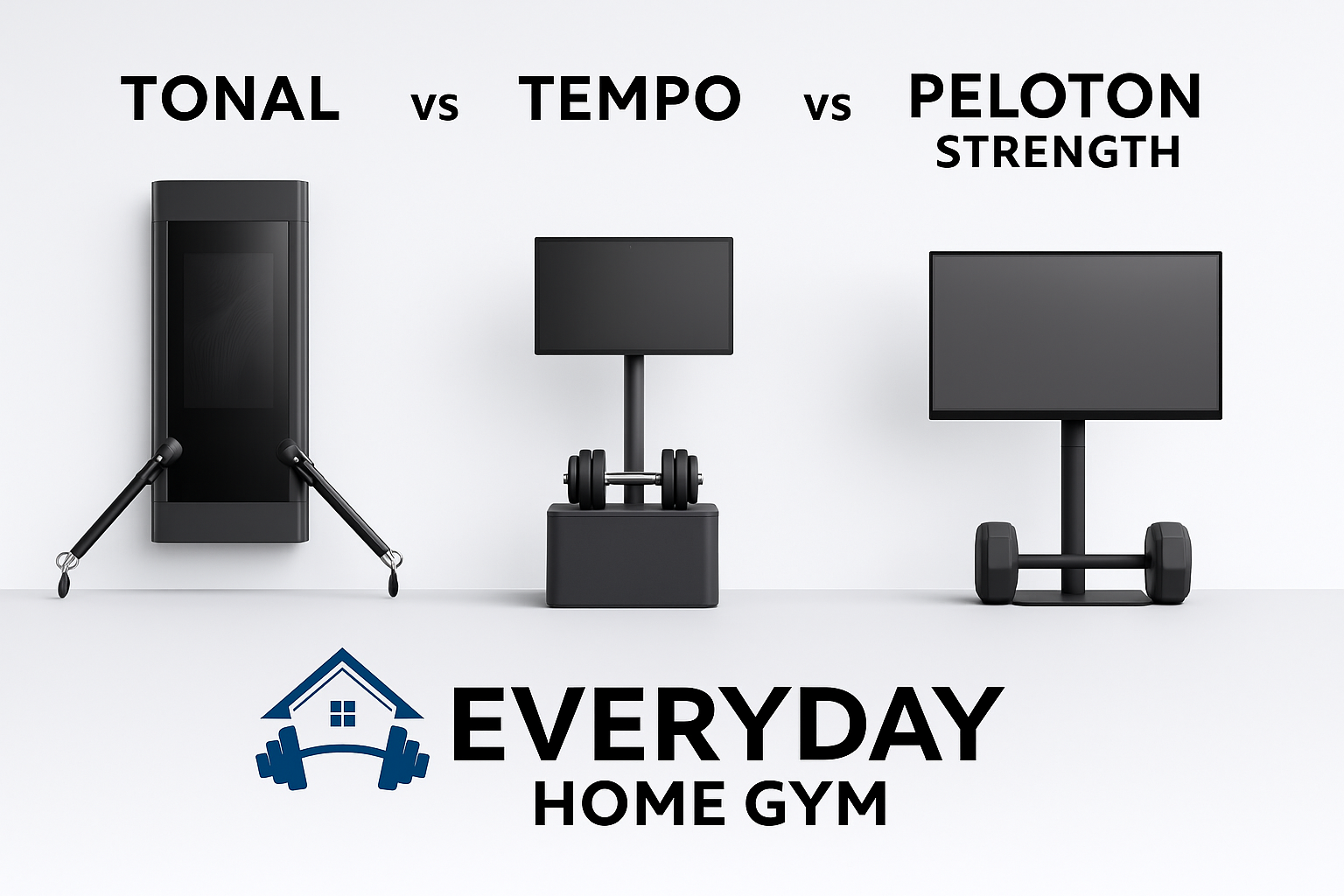
Three brands dominate the smart strength training space in 2025: Tonal, Tempo, and Peloton Strength. Each one promises a complete, personalized strength workout powered by technology, but each offers a very different experience in terms of:
- Training style and coaching
- Required space
- Equipment needed
- Subscription cost
- AI/motion-tracking capabilities
- Long-term value and total cost of ownership
This guide breaks down everything you need to know so you can choose the right system for your goals, space, and budget. Whether you’re a beginner, a busy parent trying to get stronger at home, or someone replacing a gym membership entirely, this comparison will give you clarity.
Table of Contents
- Overview of Each Smart Home Gym
- Tonal Review (2025)
- Tempo Review (2025)
- Peloton Strength Review (2025)
- Feature-by-Feature Comparison
- Which One Is Best for You?
- Recommended Accessories & Compatible Products
- Final Verdict
1. Overview: Tonal vs. Tempo vs. Peloton Strength
Before diving into the deep comparisons, here’s a quick snapshot of what makes each system unique:
- Tonal – A wall-mounted, cable-based digital weight machine using electromagnetic resistance up to 200 lbs total. It’s a compact, all-in-one system perfect for guided strength training and progressive overload.
- Tempo – A free-weight based smart gym that uses 3D sensors, cameras, or the Tempo Move’s iPhone vision tracking. More traditional strength training experience using dumbbells and barbells.
- Peloton Strength – App-based strength with optional hardware (Guide or Peloton Weights). Known for motivating instructors and strong programming, but relies on your existing weights.
Each platform takes a different approach to strength training: Tonal is the most “machine-like,” Tempo feels like guided free weight lifting, and Peloton Strength is more class-driven and accessible.
2. Tonal Review (2025)
What Makes Tonal Unique?
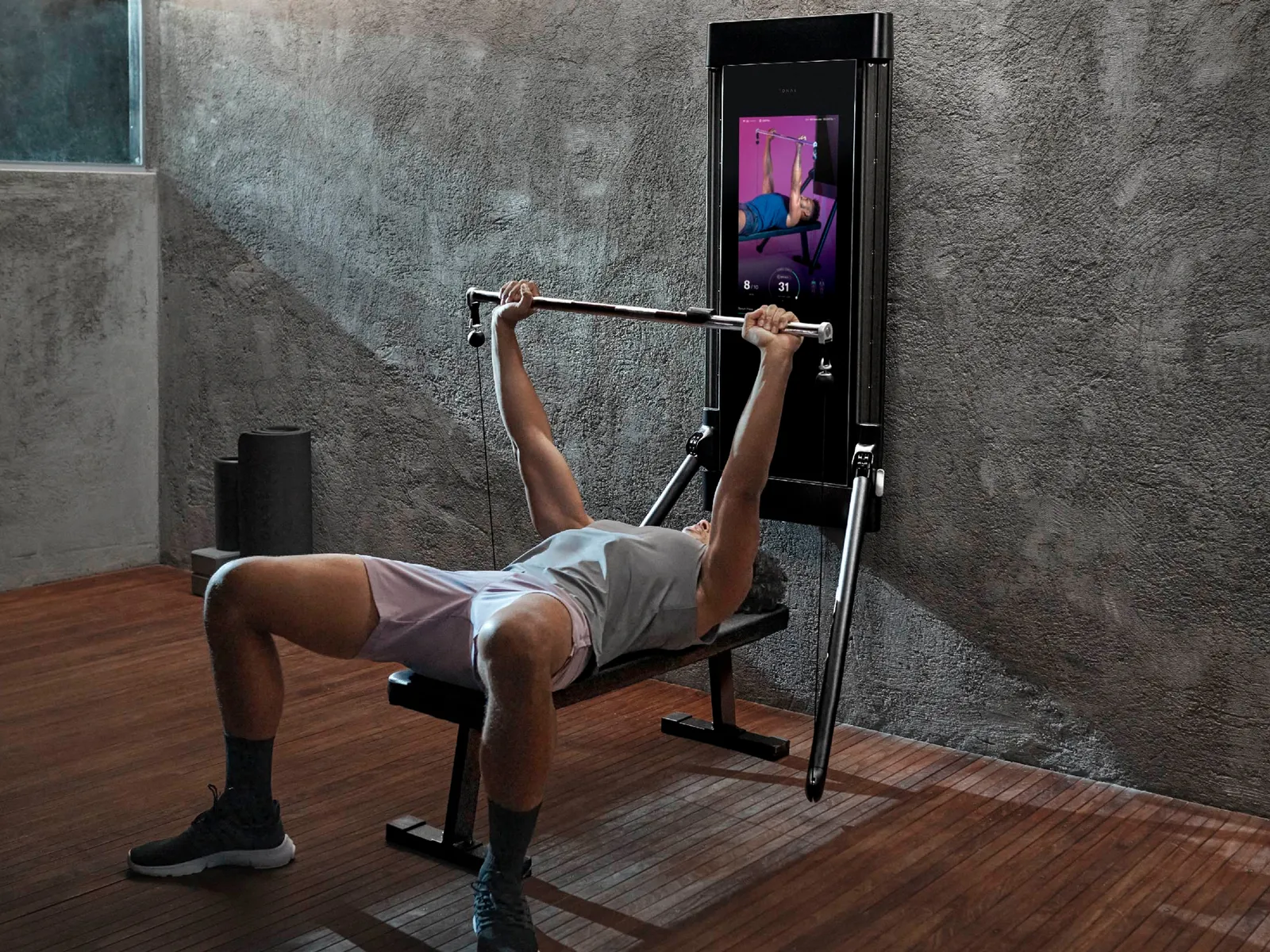
Tonal is the most technologically advanced smart home gym available today. It uses electromagnetic resistance instead of physical weights, allowing it to adjust resistance automatically during sets, track your performance, and even spot you with “digital weight” assistance.
This makes Tonal feel like a hybrid between a personal trainer, a cable machine, and AI coaching — with an extremely compact footprint.
Tonal Strengths
- Adaptive digital weight increases or decreases load mid-set.
- Automatic progress tracking across all lifts.
- Spotter mode prevents failed reps.
- Compact design — mounts on one wall.
- Beautiful, polished interface and ecosystem.
- Excellent programming for beginners and intermediates.
Tonal Drawbacks
- High upfront cost + monthly subscription.
- No heavy barbell training.
- Installation requires a solid wall and often professional help.
- Max resistance (200 lbs) may not satisfy advanced lifters.
Ideal User for Tonal
Tonal is perfect if you want a guided, all-in-one strength system without cluttering a room with weights. It’s especially strong for people who want structured programs, safe form cues, and progressive overload tailored to their current fitness level.
Real-World Takeaway
If you want the most futuristic and hands-off coaching, Tonal is unmatched. But if you prefer lifting heavy free weights or need budget flexibility, Tempo or Peloton may be a better fit.
3. Tempo Review (2025)
What Makes Tempo Unique?
Tempo takes the opposite approach of Tonal — instead of digital weight, Tempo uses real dumbbells and barbells. This makes it the most traditional strength training system among the three, but still packed with smart tracking and AI coaching depending on the model you choose.
Tempo Strengths
- Real free weights — better for functional strength.
- Affordable entry with Tempo Move or iPhone tracking.
- Strong programming for strength, HIIT, and hybrid training.
- Easy to scale with more plates over time.
- No wall installation required.
Tempo Drawbacks
- Takes up more physical space than Tonal.
- Tracking is frame-limited — not as advanced as Tonal’s sensors.
- Form correction not as accurate as digital weight systems.
- May feel less premium than Tonal in the interface and flow.
Ideal User for Tempo
If you want a smarter version of traditional lifting — actual weights, progressive overload, and strength programs — Tempo is the best fit. It’s also the top choice for people who already know how to lift but want structured programming and accountability.
Real-World Takeaway
Tempo is the most balanced system for cost, versatility, and long-term scalability. It’s the closest thing to a true free-weight home gym — smart, convenient, but not overly complicated.
4. Peloton Strength Review (2025)
What Makes Peloton Strength Unique?
Peloton Strength (using either classes, the Peloton Guide accessory, or the full Peloton app) is the most accessible and budget-friendly way to start smart strength training. It focuses on high-energy instruction, class variety, and motivation — the areas Peloton has always excelled at.
You supply your own weights. Peloton provides the coaching.
Peloton Strengths
- Lowest cost option — great entry point.
- Incredible instructors and class energy.
- Pairs naturally with Peloton cardio for hybrid training.
- No installation required.
- Guide adds movement tracking and rep-counting.
Peloton Drawbacks
- Not a complete gym — you must buy your own weights.
- AI tracking is basic compared to Tonal or Tempo.
- Programming favors circuits more than heavy lifting.
- Cannot replicate cable motions or machine-based exercises.
Ideal User for Peloton Strength
Perfect for anyone who wants affordable, instructor-led strength workouts that feel engaging and motivating — especially if you already use Peloton’s ecosystem.
5. Feature-by-Feature Comparison
Resistance Type
- Tonal: Digital electromagnetic weight (up to 200 lbs)
- Tempo: Real dumbbells/barbells
- Peloton: Bring-your-own weights
Space Requirements
- Tonal: Most compact — single wall-mounted device
- Tempo: Requires floor space + weight storage
- Peloton: Least physical hardware required
Coaching & AI Feedback
- Tonal: Best overall — automatic weight adjustments
- Tempo: Good — especially with Tempo Studio
- Peloton: Motivational but light on form correction
Pricing (Approx.)
- Tonal: $$ high upfront cost + subscription
- Tempo: $$–$$$ depending on model
- Peloton Strength: $–$$ subscription only
Who Each Is Best For
- Tonal: Beginners + guided strength users
- Tempo: People who want real weights
- Peloton: Budget-conscious users + Peloton fans
6. So… Which Smart Home Gym Should YOU Choose?
Choose Tonal if you want:
- Automatic weight adjustments
- A compact home gym with minimal equipment
- AI-guided progressive overload
- Safe lifting with digital spotting
Choose Tempo if you want:
- True free-weight training
- A scalable system you can grow over time
- Good class variety with strong strength focus
- No wall installation
Choose Peloton Strength if you want:
- The most affordable smart strength setup
- Great instructors + motivating classes
- Something that integrates with Peloton cardio
- A flexible system that works with any equipment
7. Recommended Accessories & Compatible Products
Here are highly rated accessories that pair perfectly with Tonal, Tempo, or Peloton Strength:
Adjustable Dumbbells
Bowflex SelectTech 552 Adjustable Dumbbells
Compact Weight Bench
FLYBIRD Adjustable Weight Bench
Kettlebell Set
Yes4All Vinyl Coated Kettlebells
8. Final Verdict
All three platforms — Tonal, Tempo, and Peloton Strength — offer unique advantages depending on your space, training style, and budget. Tonal is the most premium and futuristic, Tempo offers the closest experience to real strength training, and Peloton provides the best balance of cost, flexibility, and class motivation.
If you’re looking for the smartest, most guided experience, choose Tonal.
If you want traditional lifting with AI coaching, choose Tempo.
If you want motivation on a budget, choose Peloton Strength.
No matter your choice, you’ll end up with a powerful, at-home strength system that eliminates the need for a commercial gym — and keeps you consistent year after year.
Affiliate Disclosure: As an Amazon Associate, Everyday Home Gym earns from qualifying purchases at no additional cost to you.