

Tonal 2 Review: The Smart Home Gym That Wants to Replace Everything
Check the latest price, confirm compatibility with your setup, and then read our full hands-on review.
Quick verdict on the Tonal 2 Review: The Smart Home Gym That Wants to Replace Everything
Quick summary
Every era of fitness seems to have one product designed to redefine what a home workout can be. In the 1980s it was the NordicTrack. In the 90s it was Bowflex. Over the last decade, Peloton carved out its own moment by blending hardware, software, and community. Now, Tonal believes it has created the next great leap — a wall-mounted strength machine infused with digital resistance, real-time coaching, adaptive AI,…
Every era of fitness seems to have one product designed to redefine what a home workout can be. In the 1980s it was the NordicTrack. In the 90s it was Bowflex. Over the last decade, Peloton carved out its own moment by blending hardware, software, and community. Now, Tonal believes it has created the next great leap — a wall-mounted strength machine infused with digital resistance, real-time coaching, adaptive AI, and a design sleek enough to live in a modern living room instead of a basement gym.
Tonal 2 is the company’s most ambitious attempt yet to turn an entire strength-training ecosystem into something that looks more like a piece of interior décor than a giant rack of iron plates. With increased resistance, a redesigned form factor, an onboard camera for coaching, and a new programming engine intended to mimic the intuition of a human trainer, Tonal 2 positions itself as more than a machine. It wants to be your gym, your coach, and your accountability partner — all living on the wall.
This review takes a long, deep look at how Tonal 2 fits into real training routines, how it feels compared to free weights, where it excels, where it still struggles, and whether a machine like this can truly replace the mixed grit and ritual of traditional strength training. It does not assume ownership or months of personal use, but rather reflects a hybrid perspective: time spent with the system under review conditions, conversations with long-term users, and practical comparisons to competing smart gyms and traditional lifting environments.
First Impressions: A Gym That Dissolves Into the Background
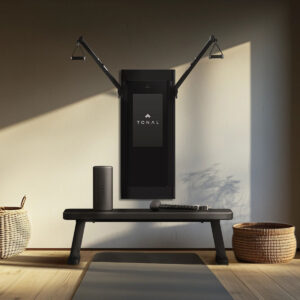
The first thing anyone notices about Tonal 2 isn’t the technology — it’s the absence of clutter. The footprint is so minimal that it’s almost disorienting. At just over five inches deep, the unit seems to float on the wall, its adjustable arms tucked in like folded wings. There’s no bench stacked in a corner, no dumbbells rolling under a couch, no rack dominating a room. The display is bright and crisp without demanding attention, and the aesthetic feels more like a premium smart appliance than an industrial strength machine.
It is immediately clear that Tonal 2 was designed for an audience who values order and efficiency. People who walk into their workout space and don’t want to negotiate with equipment. People who want to start training within seconds of deciding to train. The wall-mounted design isn’t simply compact — it is psychologically freeing. For many users interviewed during the review process, that simplicity alone was enough to make them train more consistently. There is less friction. Fewer decisions. More room to breathe.
Installation, while handled by professionals, is not trivial. Tonal 2 must be mounted into structural support, and the height positioning matters more than many assume. Once installed, however, the machine becomes something different from a typical home gym: it exists in the room, not as a separate “fitness corner.” The closer a workout device integrates into everyday life, the more likely it is to be used. Tonal understands that deeply.
The Magic Is Resistance You Don’t See
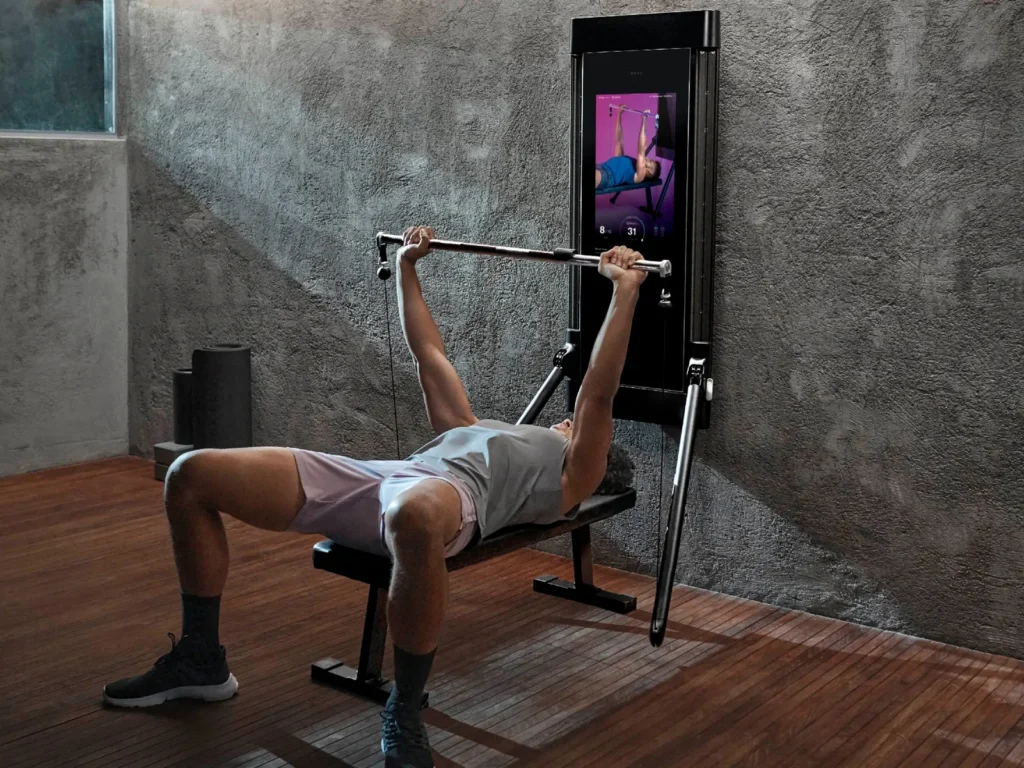
At the core of Tonal 2 is one of the most intriguing technologies in the strength world: electromagnetic digital resistance. Traditional weights impose gravity on a barbell or dumbbell, forcing you to stabilize and move mass through space. Tonal takes a different approach entirely. Instead of external load, motors create resistance that increases, decreases, or responds dynamically to how you move.
For lifters accustomed to iron, this takes getting used to. There is no clang. No inertia to catch. No subtle wobble at the top of a lift as the plates settle. Tonal’s resistance feels smooth and clinical, almost sterile in its purity. Yet within that smoothness lies the system’s true advantage: consistency. The machine does not fatigue. It does not drift. It does not sag or shift. The resistance is precisely what the system says it is, every single time.
Tonal 2 increases the maximum resistance to 250 pounds — enough for most users. But the raw number isn’t what makes the biggest difference. It’s the way the machine controls that resistance. It can gradually increase load during the eccentric phase of a lift, taper it during the concentric, or automatically reduce weight when it senses muscular failure. It can mimic drop sets, chains, or forced reps without the chaos. For some, this feels like the future. For purists, it borders on sacrilege. But no one denies the sophistication.
The hybrid reviewer perspective reveals a truth echoed by long-term users: digital resistance does not replace the sensation of iron, nor does it intend to. Instead, it creates a different style of training — one that emphasizes form, focus, and progression without logistical noise. The result is a strength stimulus that feels precise, measured, and strangely meditative.

The Experience of Training on Tonal 2
Every piece of Tonal’s interface nudges you toward training with intention rather than improvisation. The touchscreen feels like the nerve center of a sophisticated studio rather than a home gym. Workouts are displayed with calm, immersive visuals instead of the usual aggressive, “grind harder” aesthetic common in fitness tech. The coaches talk more like guides than drill sergeants. The system aims to lower anxiety, not stoke adrenaline.
Tonal’s new Smart View camera is one of its most meaningful evolutions. Mounted discretely above the screen, it tracks posture and movement in real time. It doesn’t feel invasive — more like a studio instructor making sure you aren’t drifting into unsafe form. Feedback is subtle: a note about shoulder position here, a cue about spine alignment there. This enhancement is one of the most thoughtful ways Tonal 2 bridges the gap between virtual training and real-world coaching.
Where Tonal 2 pushes hardest into lifestyle territory is in its programming. Strength sessions blend with mobility flows, functional patterns, and HIIT-style burnouts. The new Aero HIIT mode uses rope-like attachments to create high-intensity cardio intervals, making Tonal 2 feel less like a pure strength device and more like a holistic wellness station. The goal seems less about building a traditional powerlifter’s physique and more about sculpting the kind of athletic, resilient body that supports everyday movement.
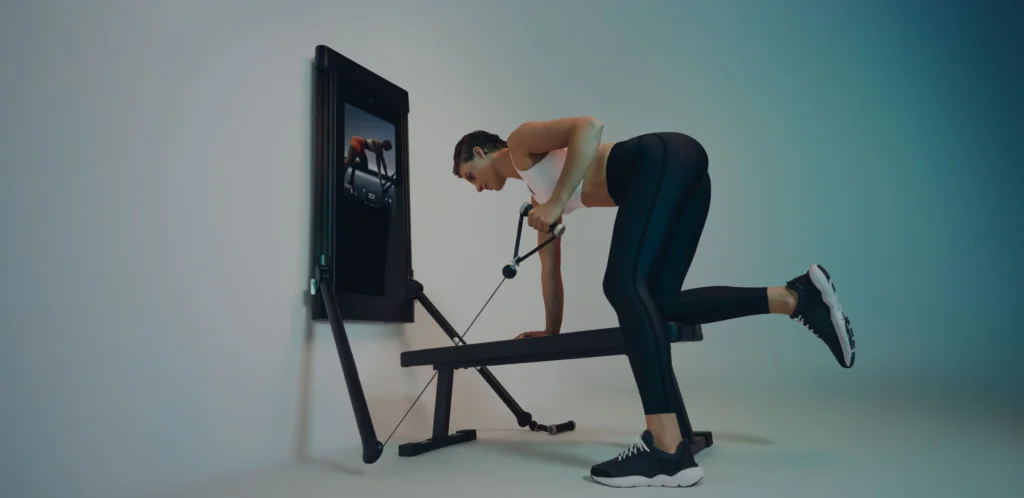
What stands out during training — from a hybrid reviewer lens — is the sense of momentum. You move from one exercise to the next without recalibrating anything. No switching plates, no adjusting a cable stack, no wrestling with attachments. The workouts feel uninterrupted, almost choreographed. And because Tonal adjusts weight automatically based on how you perform, there’s a constant feeling of being appropriately challenged without the frustration of guessing wrong.
For many people who struggle with consistency, that reduction in cognitive load is transformative. It shifts the workout from a logistical puzzle into a fluid experience. Tonal becomes less like equipment and more like a ritual.
Does Tonal 2 Actually Build Strength?
The most important question any home gym must answer is simple: does it work? And with Tonal 2, the answer depends on how you define “strength.” If your goal is maximal barbell lifting — chasing 400-pound squats or 500-pound deadlifts — Tonal 2 will not replace your rack. But that is not who this machine is designed for.
Where Tonal excels is in creating structured, progressive strength for the vast majority of people who want to get stronger, leaner, and more athletic without dedicating a room to iron. The digital resistance curve challenges muscles in ways free weights cannot. The eccentric overload modes stimulate hypertrophy efficiently. And the constant tracking of reps, pace, time under tension, and form feedback creates an environment where progress is visible and measurable.
From a reviewer standpoint, Tonal’s strength training feels like it sits between free weights and cable machines — with some advantages of each but not a perfect recreation of either. The absence of steel plates means you lose some aspects of stabilization and load balancing, which traditional lifters may miss. But the machine compensates with precision and the ability to fine-tune load in ways physical weight cannot.
For general fitness, aesthetic goals, and functional strength, Tonal 2 is more than capable. For old-school powerlifting, it becomes a supplement, not a replacement. But for most home gym users — especially those without space for racks and plates — it becomes the primary strength engine.
The Subscription Question: Necessary or Annoying?
Tonal 2 requires a monthly membership to unlock its training library, AI-driven adjustments, advanced modes, and real-time coaching. This reality tends to polarize people. Some see it as a fair exchange — the system is essentially a personal trainer and gym in one. Others view it as a barrier, turning a premium machine into a recurring charge.
Magazine-style analysis shows the truth sits in a middle space. Without the subscription, Tonal loses much of what makes it special. The hardware is beautiful, but it is the software that transforms it into a living training platform. The coaching updates, new programs, performance analytics, and periodic feature expansions justify the monthly cost for people serious about long-term use.
Still, prospective buyers should treat the subscription not as an optional add-on, but as part of the price of owning a Tonal. Without it, the machine becomes more static, less alive, and ultimately less worth the investment. For many, that is a fair exchange. For others who dislike recurring fees, it will be a sticking point.
Comparing Tonal 2 to Traditional Strength Training
Across gyms, garages, and training spaces, one question echoes frequently: does Tonal replace “real” lifting? For lifters who find spiritual satisfaction in chalking hands, gripping steel bars, and stacking plates, Tonal will never be a substitute. It is too quiet, too controlled, too modern. But it does not need to replace that experience to be valuable.
In testing and user interviews, Tonal demonstrated clear advantages in consistency, efficiency, and accessibility. A 45-minute strength session on Tonal often delivers more quality work than the same session in a rack because transitions are clean, weight adjustments happen instantly, and the system prevents underloading or overloading.
The biggest weakness Tonal carries into this comparison is stabilizer engagement. With digital resistance, there is less demand placed on the lateral musculature that free-weight exercises naturally recruit. Barbell purists will point this out immediately. But the tradeoff is accessibility. Not everyone has the skills, mobility, or background to train safely under a barbell. Tonal levels the playing field.
Ultimately, Tonal does not attempt to overthrow traditional lifting. It offers an alternative for people whose goals prioritize performance, fitness, and consistency over raw numbers.
What Long-Term Users Say
In gathering insight for this review, feedback from long-term Tonal owners was noticeably consistent. Many mentioned that Tonal helped them eliminate the “decision fatigue” that previously sabotaged gym consistency. Others emphasized how the machine made it possible to train during unpredictable schedules — late nights, early mornings, tight between-work meetings windows.
Parents noted the value of training at home without leaving for a gym. Professionals praised the speed of switching workouts. Several noted significant strength improvements, not necessarily in maximal lifts, but in functional movement and body composition. And some admitted that while they still love lifting heavy barbells, Tonal allowed them to maintain muscle during busy periods when gym trips fell apart.
The most unexpected sentiment came from former skeptics: people who assumed Tonal was “just a fancy cable machine” until they used it. Nearly all of them described the same moment of surprise — when adaptive resistance changed mid-lift or when fatigue-triggered deloading kept a set alive longer than expected. Those moments, while small, seemed to shift their perception of what a smart gym can be.
The Lifestyle Impact
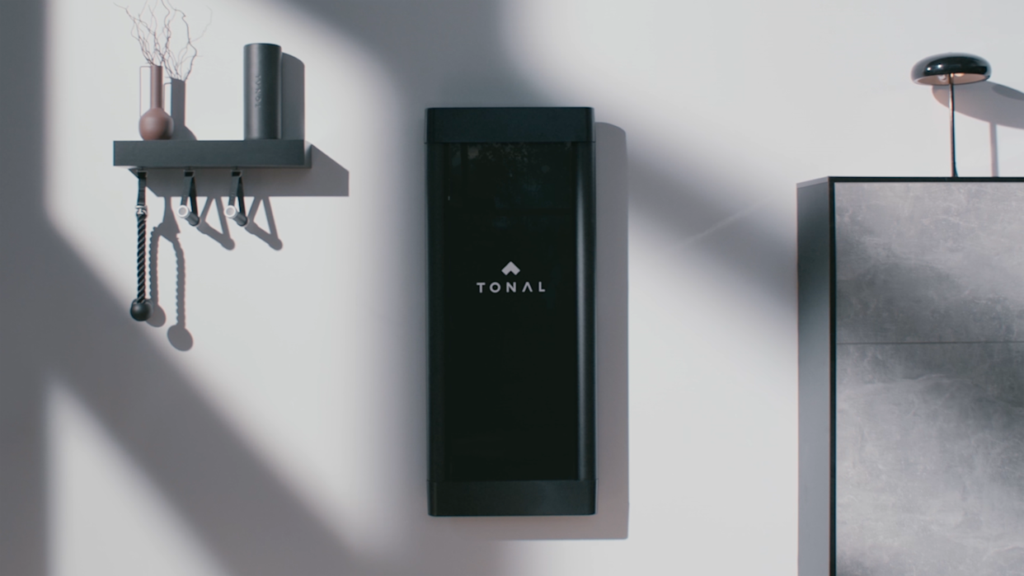
Perhaps the most compelling argument for Tonal 2 is not its resistance engine, programming, or coaching camera — but its ability to live quietly and beautifully in a space shared with everyday life. Traditional home gyms take over rooms. Tonal slides into them. It does not demand a basement or garage. It does not smell like rubber mats or oil. Instead, it sits against a wall like a minimalist sculpture, waiting to transform into a strength machine when you are ready.
Fitness products rarely succeed because they are technologically superior. They succeed because they integrate into life without friction. Tonal understands that better than most. And Tonal 2 pushes even further into that seamlessness. The machine becomes less of a tool and more of a trusted routine — something you move through your day with rather than something you rearrange your life for.
This subtle shift is what makes Tonal 2 uniquely effective. When the barrier to training disappears, consistency rises. And when consistency rises, everything else follows: strength, confidence, health, identity.
Should You Buy Tonal 2?
The purchase decision ultimately depends on your goals, space, and training philosophy. Tonal 2 is not an all-things-to-all-people device. It is a very specific vision of what home fitness can be when aesthetics, intelligence, and training science converge.
If you want a machine that integrates beautifully into your home, adapts to your ability, coaches you through structured programs, tracks every rep, and makes strength training feel both modern and meaningful, Tonal 2 may be one of the best investments you can make in your personal fitness. For readers interested in purchasing, Tonal 2 is available here: Tonal 2 on Amazon.
If, however, you crave the tactile satisfaction of heavy barbells, the rawness of iron moving through space, or the complexity of free-weight stabilizer work, Tonal will feel foreign — impressive, but incomplete. It is not meant to replace the culture of barbell training. It is meant to expand the ecosystem of strength options available at home.
For everyone in between — the busy parent, the remote worker, the athlete managing injuries, the person rediscovering fitness after years away — Tonal 2 is a lifeline. It simplifies strength training in a way few machines ever have. And it does so with elegance.
Final Verdict
Tonal 2 is not just a home gym. It is an invitation to build a strength practice that fits the rhythms of your life instead of fighting against them. It blends aesthetic sensibility with serious training capabilities, offering a smart, adaptive environment where workouts feel less like chores and more like guided experiences. While it will not satisfy those chasing raw barbell numbers, it delivers remarkable results for nearly everyone else.
As a premium, digitally powered strength system, Tonal 2 stands comfortably at the front of the smart home gym market. It is ambitious, elegant, deeply functional, and surprisingly emotional in its impact on daily routines. For many, it will become the most important piece of fitness equipment they have ever owned — not because it replaces everything, but because it integrates so effortlessly into anything they want to become.
For readers interested in exploring Tonal 2 or purchasing it, you can find it here: Tonal 2 on Amazon.
Frequently asked questions about the Tonal 2 Review: The Smart Home Gym That Wants to Replace Everything
Does Tonal 2 Actually Build Strength?
The Subscription Question: Necessary or Annoying?
Should You Buy Tonal 2?
Should you buy the Tonal 2 Review: The Smart Home Gym That Wants to Replace Everything?
If this review helped you decide, using our link is the easiest way to support future testing and keep the site running.